Home›Color management
Color Management
Color management
In the cel era, the color reference on the production floor was the cel paint itself. Now that coloring is done on computers, a specified color will not necessarily look the same to other staff or to viewers. Loppo considers practical ways to handle color in production, from both the history of the animation industry and digital technology.
- Handling color from the cel animation era to digital coloring
- Color consistency, lost along with the cut bag
- First steps toward color management in production
How color handling has changed
From cels to digital coloring
Why color management is needed now
Most anime today is based on source material such as games or full-color web comics, for which viewers already have an image of the colors. Colors that differ from that image can damage the brand, and with heavily stylized characters, inaccurate color can make them hard to tell apart.
Viewing devices have diversified too. Color is also a storytelling tool that conveys a character's emotions and the mood of a scene. If the intended color is not reproduced, the nuance you want to convey is lost.
Everything from production environments to distribution and merchandise has diversified, involving many organizations in Japan and abroad. Adopting standardized color management lets working environments be aligned across organizational boundaries.
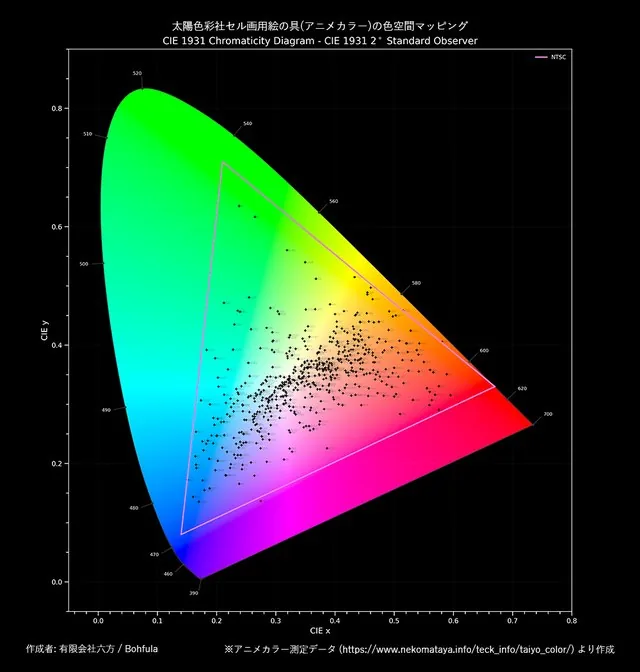
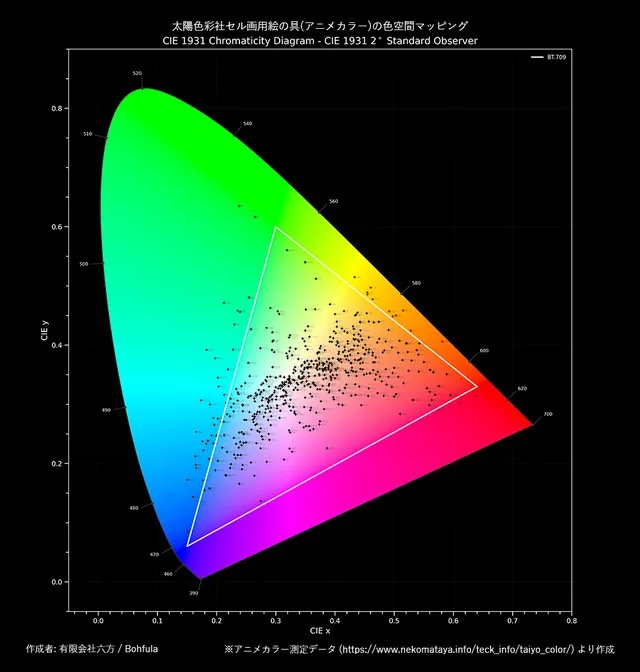
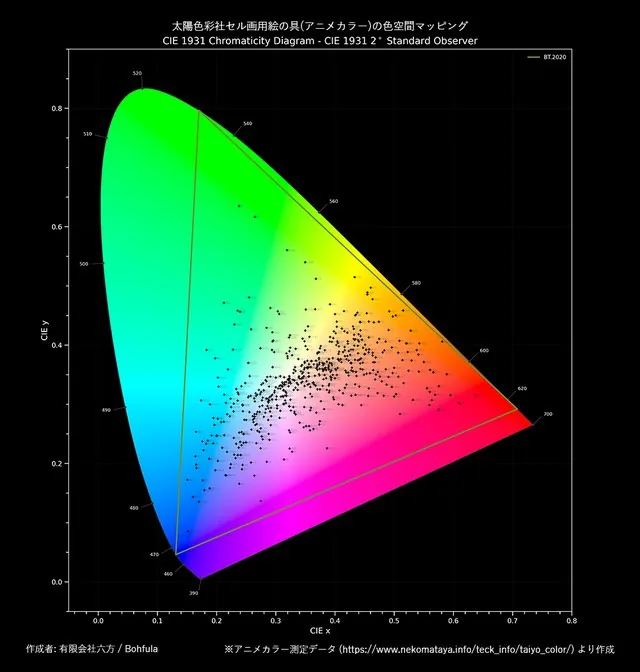
xy chromaticity diagrams overlaying measured values of legacy cel paints (Taiyo Shikisai) on TV broadcast gamuts. Details in the blog post.
First steps in color management
A wide-gamut, high-luminance setup is not necessarily required
- 1
Share knowledge, with photography at the center
First, the director of photography takes the lead in sharing color management knowledge with all staff involved at the planning stage, because a color workflow that photography cannot handle is meaningless.
- 2
Start with the staff who decide color
Enable the art director, color designer and color stylists to design and check in the correct color space. An SDR reference monitor is enough to begin with. Regular calibration to maintain the environment matters more than expensive equipment.
- 3
State the color profile in color design documents
Create color design documents with a clearly defined color profile at the planning stage and share them not only with the production team but with everyone involved in the rights to the work. This prevents colors from changing in later home video releases or remasters.
- 4
Separate managed assets from unmanaged ones
There is no need to impose color management on everyone; it is an excessive burden on staff who do not handle color. In processes that separate those who decide, apply and check color, such as finishing that paints according to the color callout sheet, the work holds up without color management at the painting stage. Rather, if you distinguish which assets were made in a color-managed environment, photography can use that in decisions such as retakes.
Color management inquiries
Feel free to contact us about handling color in production.